
After the financial system implodes
Political chaos follows economic chaos.
The condition of the financial markets is increasingly dire.
The American intervention to support the Japanese yen, which is near 40-year lows, has failed. The yen is back at the same level it was before the intervention, meaning that the Americans only bought a month of time. Furthermore, the Americans sold euros to buy yen. This angered the Europeans, and they seem to have retaliated by warning that the AI bubble is about to burst. This is significant. Typically, the masters of finance have coordinated their interventions to maximise their impact and pacify the markets. That they are now apparently throwing one another under the proverbial bus is simply unprecedented.
Global debt levels
Briefly, global debt levels are at historic highs, and they have continued to rise since the 1950s.
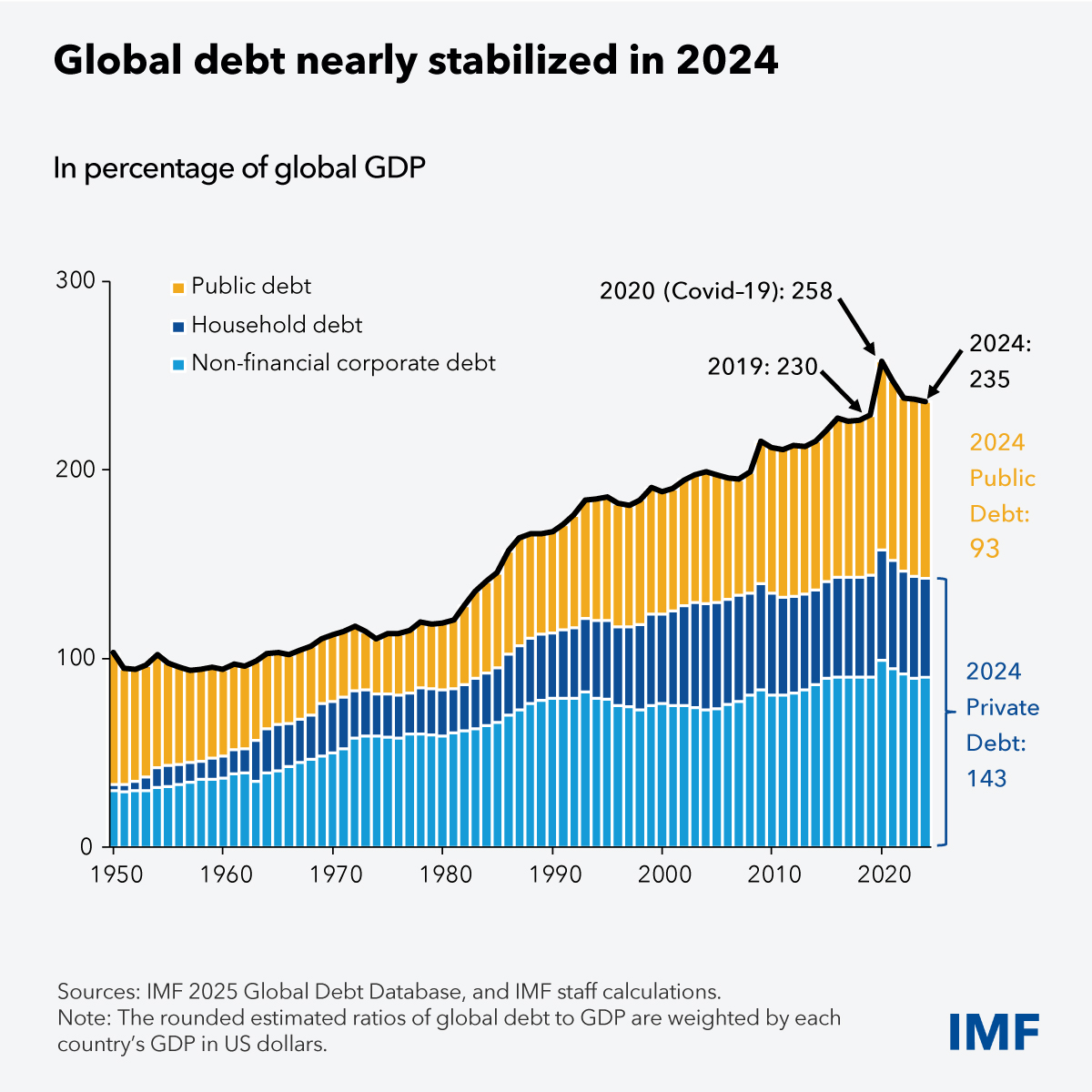
America has been leading in terms of total borrowing, with government debt above 120% of GDP, which is where Japan was in the early 2000s.
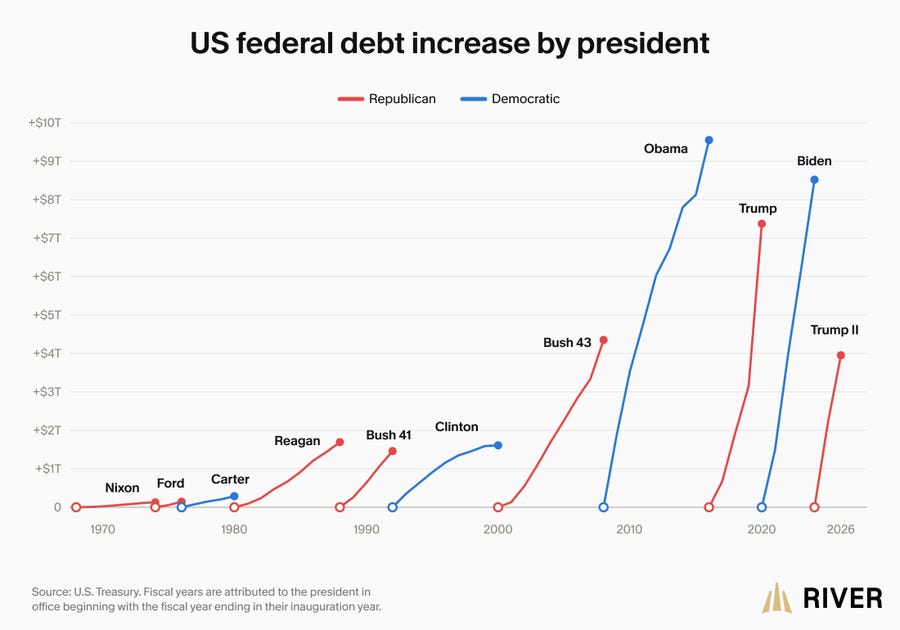
The West became especially addicted to cheap debt following the disastrous tenure of Federal Reserve Chairman Alan Greenspan, who set policy rates at historic lows. Western and some developing governments have refused to adapt to the new reality, in which interest rates will never be below 4% again without leading to catastrophic second order consequences. Meaning that the stock of debt kept on rising. Now, increased interest rates threaten the financial viability of states, not just households.
Interest Rates
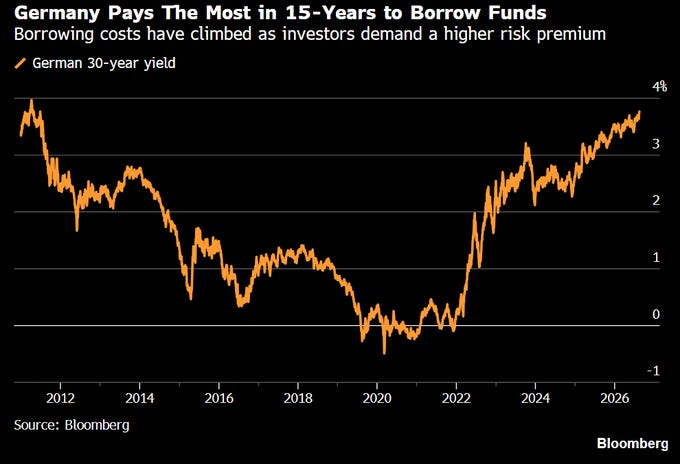
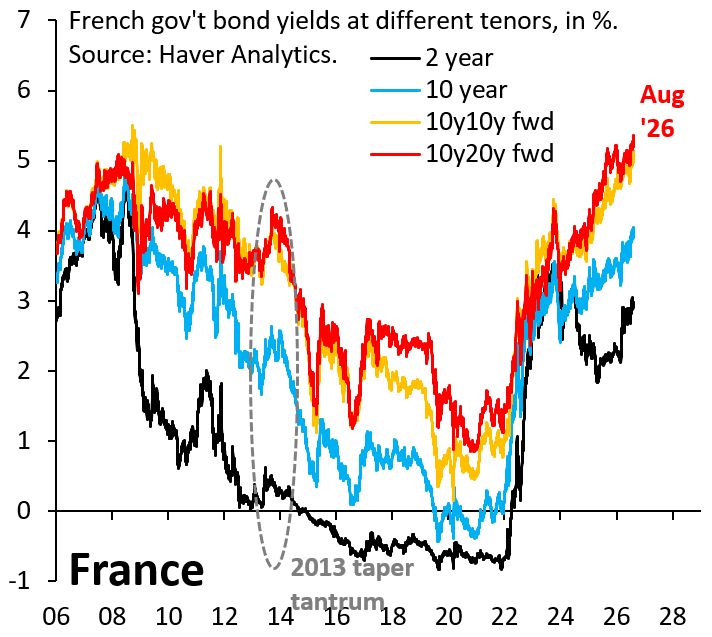
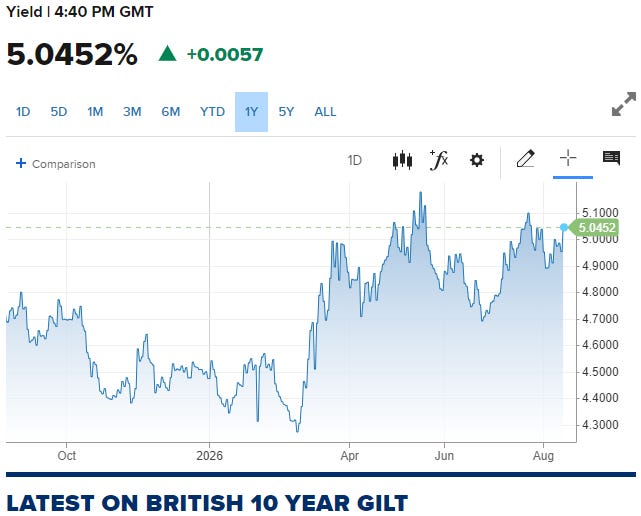
Interest rates for government debt in the USA, UK, Germany, France, and Japan are at or near 20-year highs, as per the charts below. Simply, higher costs of energy imports are making investors lose confidence that there would be sufficient economic growth to keep debt to GDP ratios at current levels. Lower growth leads to lower taxes as well as greater social spending, leading to more borrowing, and raising the cost of debt.
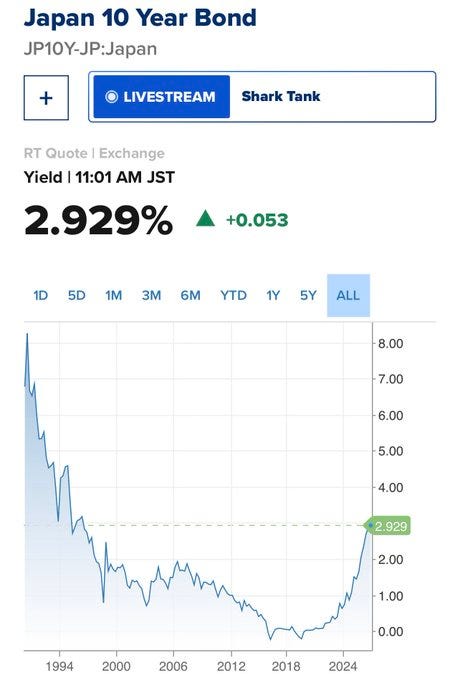
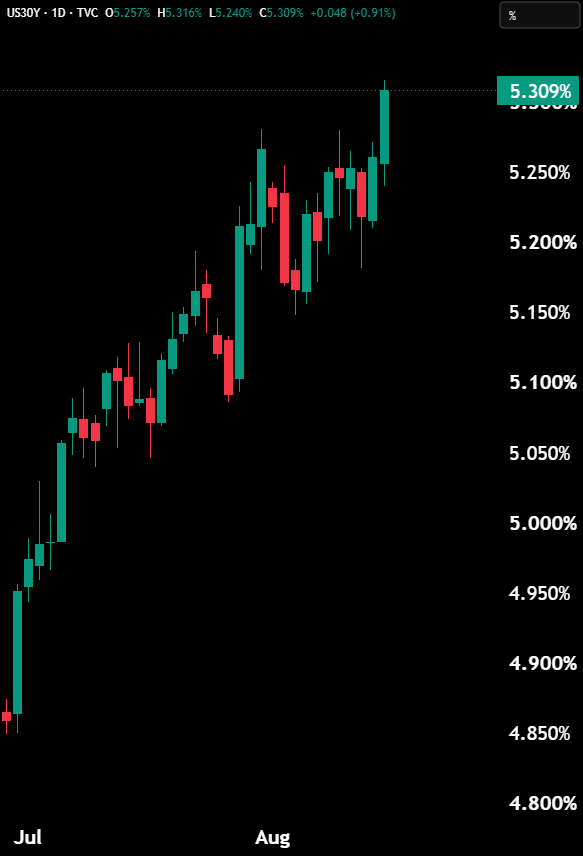
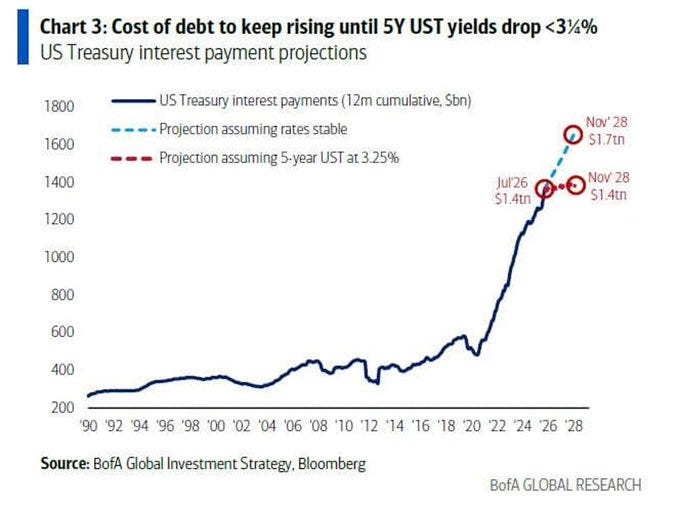
The result of the increase in total debt, along with the increase in interest rates, has been an exploding amount of interest payments for all developed economies. Britain’s interest expense now is £109 billion per annum. This is a historical level that exceeds defence, education, and is half the biggest item of spending, Health and Social Care. In the USA, the interest expense on the debt was USD1.4 trillion over the course of the past 12 months, according to the Kobeissi Letter, quoting Bank of America.
Japan
The Japanese are the most vulnerable, given their 250% debt to GDP and high dependence on energy imports, which is why their currency is devaluing: investors are losing confidence in the country. However, the Japanese are the largest holders of American Treasury bonds. If they were to sell some of their dollar reserves to defend the yen, this would cause a further increase in American interest rates, which in turn tend to drive higher interest rates throughout most of the world. Furthermore, as the Japanese yields rise, there will be pressure on the carry trade, in which financiers borrow in yen to invest outside Japan in other, higher yielding assets. If this trade is forced to unwind: borrowers are forced to sell and repay their debts, then at the very least hundreds of billions of assets would have to be sold. That could contribute to market crashes in various unseen corners of the financial markets.
Commodities
(Paying subscribers can find a link to our next Geopolitics Monthly below)
