
America's Success in the Iran War
Turkey is on a collision course with Iran and Israel, with Iraq and the Gulf in the crosshairs.
Iraqi Prime Minister Ali Zaidi has made a number of high profile international visits in recent weeks, including to Iran, the USA, and, in our view most importantly, to Turkey on 28 July. He plans a visit to Saudi Arabia on 30 July. In addition, on 28 July, the Saudis launched airstrikes in conjunction with the United States targeting Iraqi Popular Mobilisation Units allegedly responsible for strikes on Aramco’s Abqaiq oil processing facility and on the East West Pipeline. Finally, Iran’s Islamic Revolution Guards Corps (IRGC) fired several ballistic missiles at Mowaffaq Salti Airbase in Jordan on the night of 28/29 July. We will explain how these issues are interlinked, and what they say about the future of the region.
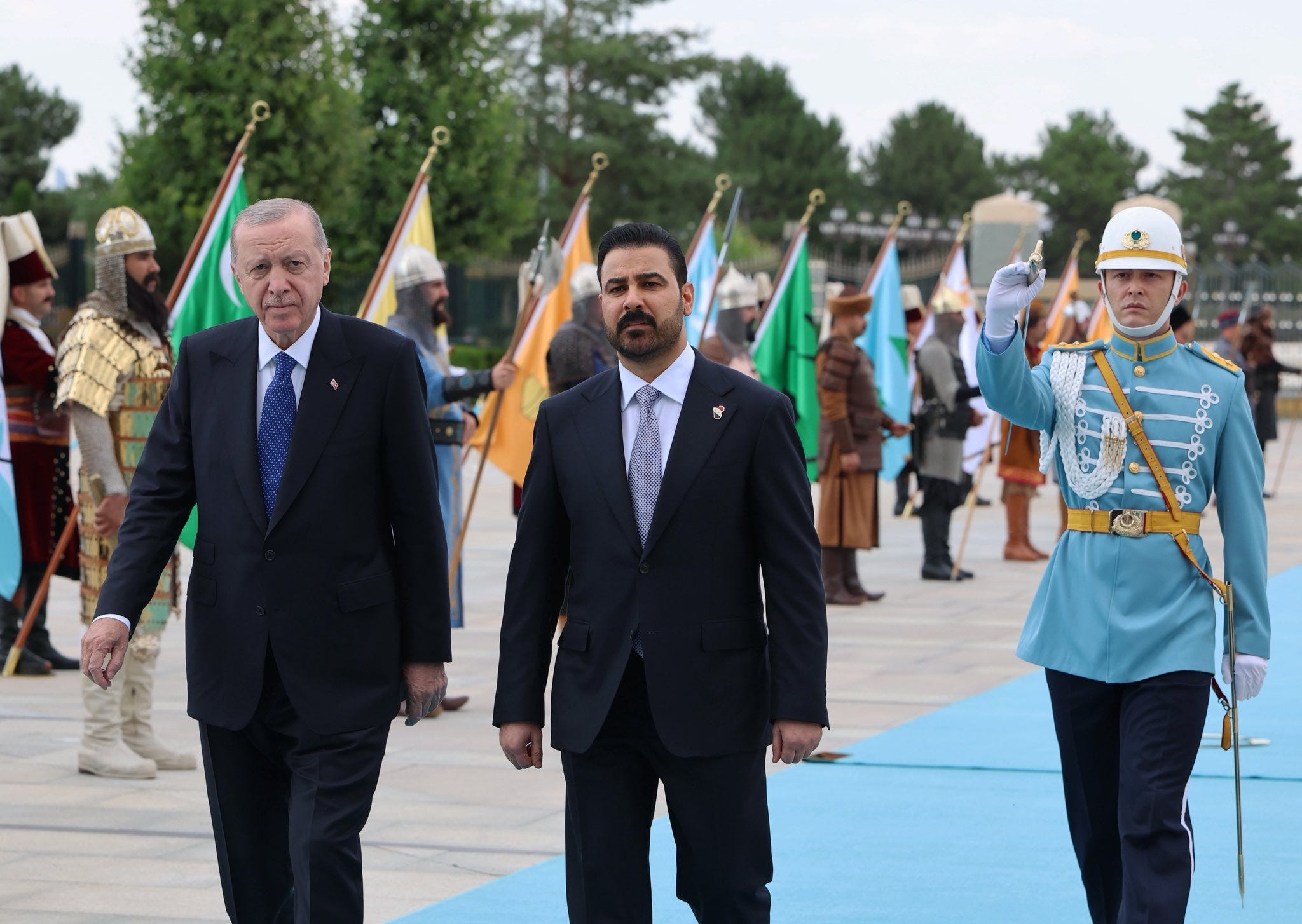
Zaidi’s bet
The Turkey visit’s significance comes from Zaidi’s confirmation of Iraq’s commitment to the Development Road Project, which aims at linking up Turkey and the Gulf via Iraq through energy and infrastructure developments funded by Qatar and other Gulf states. Visiting Turkey and then Saudi Arabia highlights how the project threatens Iranian ambitions to more fully integrate Iraq into its sphere of influence. It is a direct challenge to Iran’s ambition of becoming the regional hegemon over the Gulf.
Zaidi, Turkey, and Gulf states are hoping that Iraqi politicians’ legendary corruption will allow them to fragment the Iraqi Shi’a political scene enough for components of this project to go through. Zaidi has reportedly promised Popular Mobilisation Units militia leaders that he would allow them to even more firmly control certain ministries - to which he has delayed appointing ministers - in exchange for their disarmament.
Crucially, Turkey promised to arm Iraqi forces. The Turks still aspire to at least control northern Iraq up to Salaheddine and Anbar Provinces, and view at least northern Kurdistan as a key part of their own security. In the past, the Turks have worked with Sunni leaders to establish militias supportive of their aims. With Turkey and Saudi Arabia cooperating more closely, the prospects for the Sunnis and the Kurds against Iran seem better.
The Iranian perspective
For Iran, Turkey is an ally of the United States. Turkey defeated Iran in Syria, and may do so again in Iraq. The Safavids allied with Portugal and then Britain for a reason: they are surrounded by Sunni powers, and they need Western backing against them. Given that Zaidi first got American support for the Development Road and then Turkish and eventually Saudi support, the Iranians are more threatened than ever. Especially as they face a war with Israel and the USA.
That said, Israel and Iran share an interest in preventing Turkish dominance over Iraq. From the Israeli perspective, the next domino after Iraq and Syria would be Jordan, posing an existential threat to Israeli security.
The US-Iran War’s Greatest Success
All this should be seen in a wider context: the actual, hidden successes of the American war on Iran.
We have explained ad nauseum how the war failed in attaining its declared objectives of denuclearising Iran, ending the Iranian missile programme, ending Iran’s relations with its proxies, and, now, re-opening Hormuz and Bab al-Mandab straits. On all these fronts, the American-Israeli war on Iran has failed. Where it succeeded, however, is far more important.
The war succeeded in several arenas:
