
Baltics escalation
The Iran War will likely embolden Russia in Europe, while encouraging Ukraine into further risk taking.
Commercial topics: Risks to Baltic states, Finland, Romania, and Poland. Indicators of increased risk. Likely Russian targets.
The Russia Ukraine War is obviously escalating. Below is a summary of the key developments, along with an explanation of why Russia will be more emboldened to attack Baltic states, Romania, and Poland, along with a timeline for escalation. We also explain the worsening Ukrainian position in the Donbass.
Frontline update
The size of Ukraine, the low number of troops available to both sides relative to that size, and the volume of drones being used all militate against rapid advances. There are no blitzkriegs in this war - the same is true of Israel’s wars in Gaza and Lebanon, and reflects the nature of modern warfare. Advances over even small urban areas are slow and difficult. The issue therefore becomes the ability to maintain and replace men and materiel. In this domain, the Russians have an advantage. They are slowly accelerating their advances. This is nowhere near enough to conclude the war quickly, however, at least not without Ukraine collapsing. This is contrary to what we expected last year.
The Russian strategy over the past couple of years has been consistent: launch a series of slow offensives that gradually speed up during spring and early summer, build up forces and capabilities, consolidate over winter. This is a slow grind that is not decisive, and, at the current rate, will not resolve the war in the coming year or two, contrary to our earlier expectations.
Specific frontlines that are worth mentioning are:
Sumy and Chernihiv: There, Russia launched an offensive intended to deny the use of the north of Ukraine to launch drone or ground attacks into Russian territories, and to build up positions around Sumy, in advance of a broader attack against the city. This would bring the Russians closer to Kiev, and force the Ukrainians to divert troops from elsewhere. The Russians are around 10km from Sumy, but, in Ukraine, this is a long distance, given that the Russians will have to advance through defended forests and urban areas.
Kharkiv: Russians are very slowly establishing a buffer zone in Kharkiv province, with the aim of pushing the Ukrainians away from their borders. The Russians are far from being in a position to launch an offensive on the city.
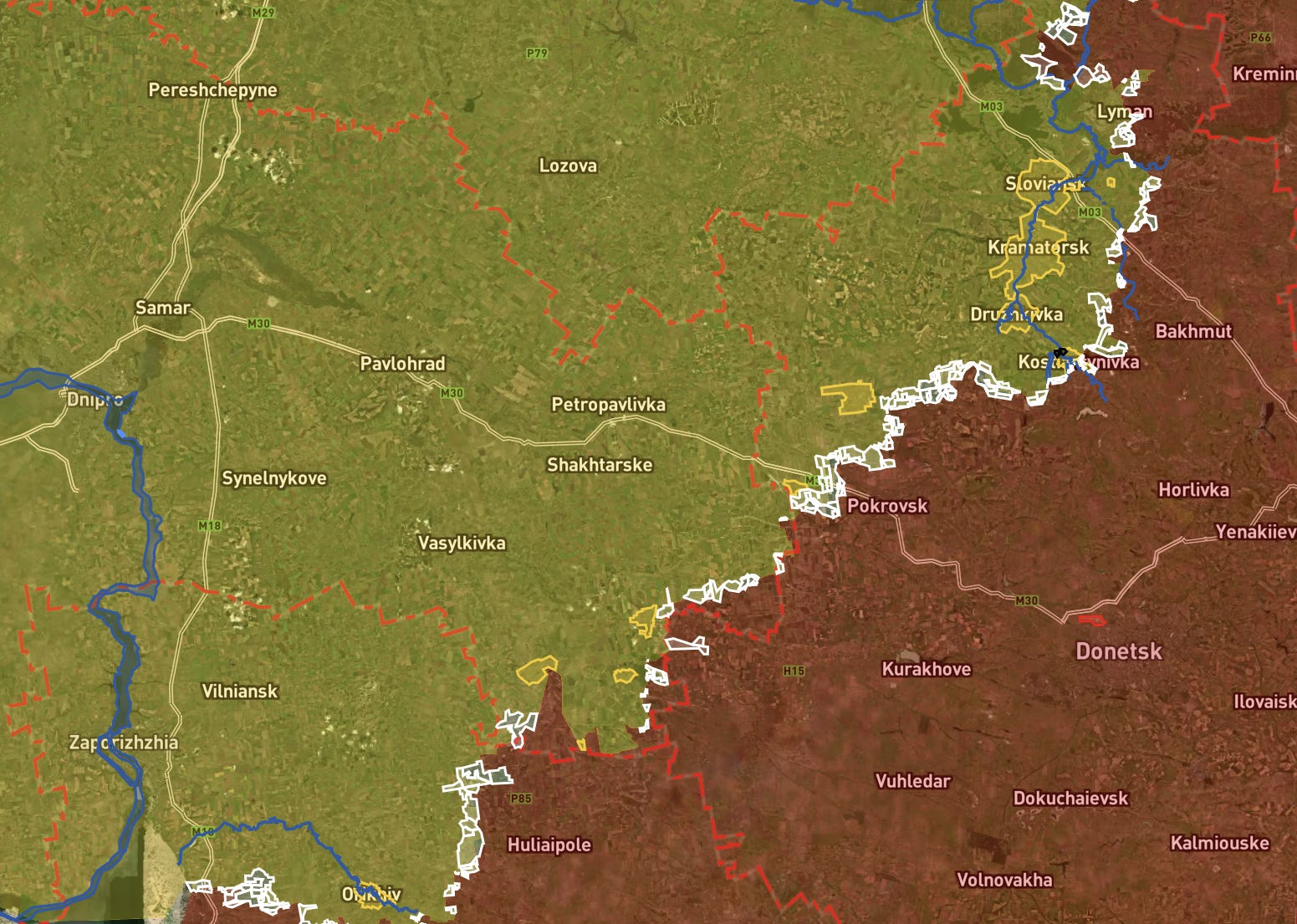
Donbass: This is the main effort by Russia. The aim is to dismantle the Lyman - Solvyansk - Kramatorsk - Kostyantynivka defensive line. There, Lyman has been besieged from three sides, while Kostyantynivka is likely to fall by the end of summer. The frontlines are moving rapidly closer to Slovyansk, at which point Kramatorsk would be irrelevant. Breaking this line, or flanking it, would allow in theory faster Russian advances, most likely towards the critical logistics hub of Pavlohrad. The Ukrainians would have to move troops from other fronts, leading to even more rapid Russian advances.
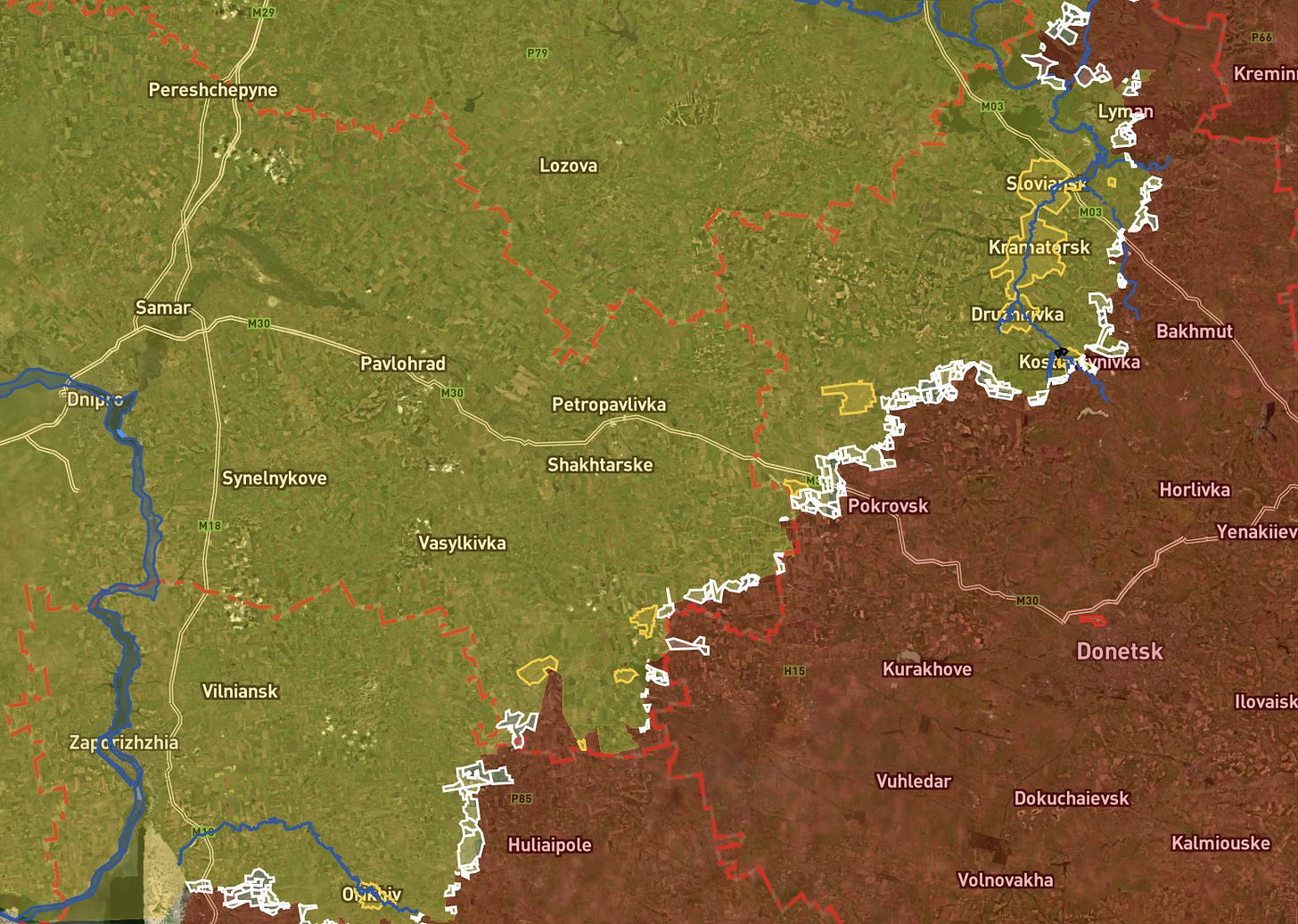
The Donbass frontlines with Zaoporzhzhia in the south. Zaporozhzhia: The Russians are advancing along the Ukrainian defensive lines, which are positioned towards the south, from the east - meaning that the lines are far less effective and have been outflanked. The Russians likely hope to reach Zaporozhzhia city itself by next year.
Drone war escalation
The second key factor that is changing rapidly in the Ukraine War is Russian allegations, likely true, that Ukrainian drone attacks are using the airspace of Baltic states, including Finland. Russia is claiming that Poland, the Baltic states, and Finland have all allowed Ukraine to use their airspace or territories to target Russia.
