
Clash of Civilisations
The Sunni giant awakens
On 7 August, in Mecca, the Crown Prince of Saudi Arabia Mohammad bin Salman, President of Turkey Recep Tayyip Erdogan, and Prime Minister of Pakistan Shehbaz Sharif, signed a joint defence treaty called the Mecca Joint Defence Agreement. The Mecca Agreement “stipulates that any armed attack against one of the three states shall be regarded as an attack against them all”, and “provides for the enhancement of all aspects of defence cooperation”.
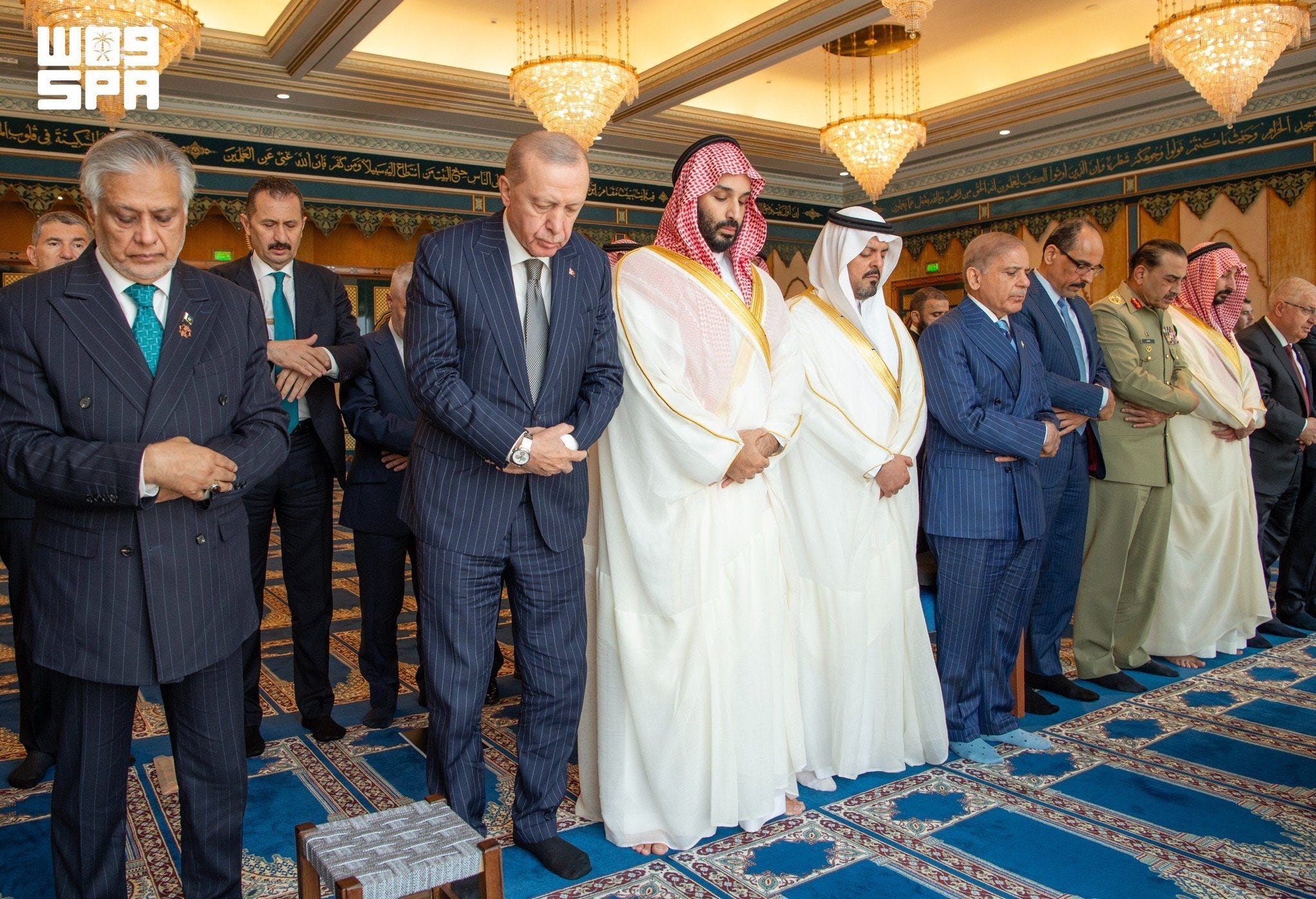
The leading states of the Sunni Muslim world, despite some diverging interests, have joined together in a defence pact targeting Iran, Israel, and the West. Although there are areas of diverging interests between them and limitations on their military capabilities, this is easily the most significant geopolitical development since September 11, 2001. After more than two decades of American-led, Israeli-driven interventions in the Muslim world, four decades of Iranian expansionism, and eight decades of Israeli aggression, the Sunni Muslims have rallied. The Anglo-American dominance of the Middle East, and its Israeli ally, now face a disaster.
Shared interests, diverging interests
The main shared interest that the Pakistanis, Turks, and Saudis share is in keeping the Red Sea open. This is the primary objective of this coalition, and the area where their joint ambitions are most realistic.
Similarly, the three countries have an interest in GCC stability - up to a point. The Saudis are keen to dominate Kuwait, Bahrain, Qatar, and the UAE. Turkey has signed defence agreements with Qatar and Kuwait, and likely does not want the Al Saud to grow too strong. For Pakistan, the priority is an economic arrangement that maintains the aid, investments, and remittances that they receive.
Turkey and Pakistan most likely do not want to be drawn into a conflict with Iran on behalf of Saudi Arabia. Their aim is to deter Iran from further attacks on Saudi Arabia.
Turkey and Saudi Arabia have an interest in delineating spheres of influence with Iran in Iraq. Turkey’s main problem is energy security. If it can add to the railroad project intended to tie Istanbul and Riyadh a pipeline network - not one that goes through the Red Sea or Israel, which we have discounted as delusional, but one which goes to Turkey - then Turkey’s need for influence in Iraq would decline.
