
Our view has consistently been that a US-Iran war would be brief, informed by the following factors:
China is providing Iran with live intelligence on the movements of American assets, giving it access to its satellite network, and helping it maintain command and control. American efforts to shut down Iran’s command and control may not succeed, allowing Iran to continue firing missiles, risking significant American losses. And even if some Iranian communications are successfully shut down, Iran would still be able to target static American bases throughout the Middle East.
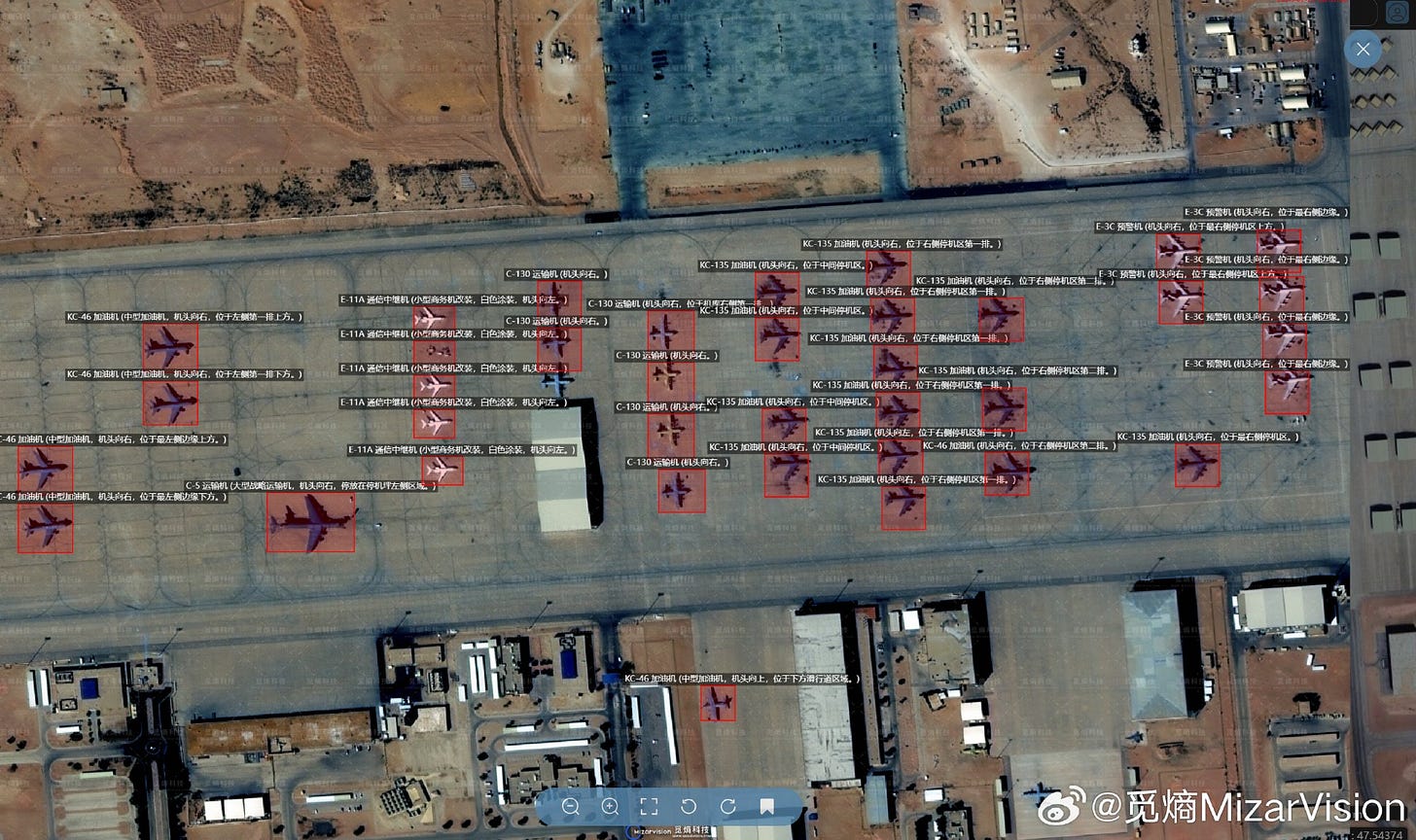
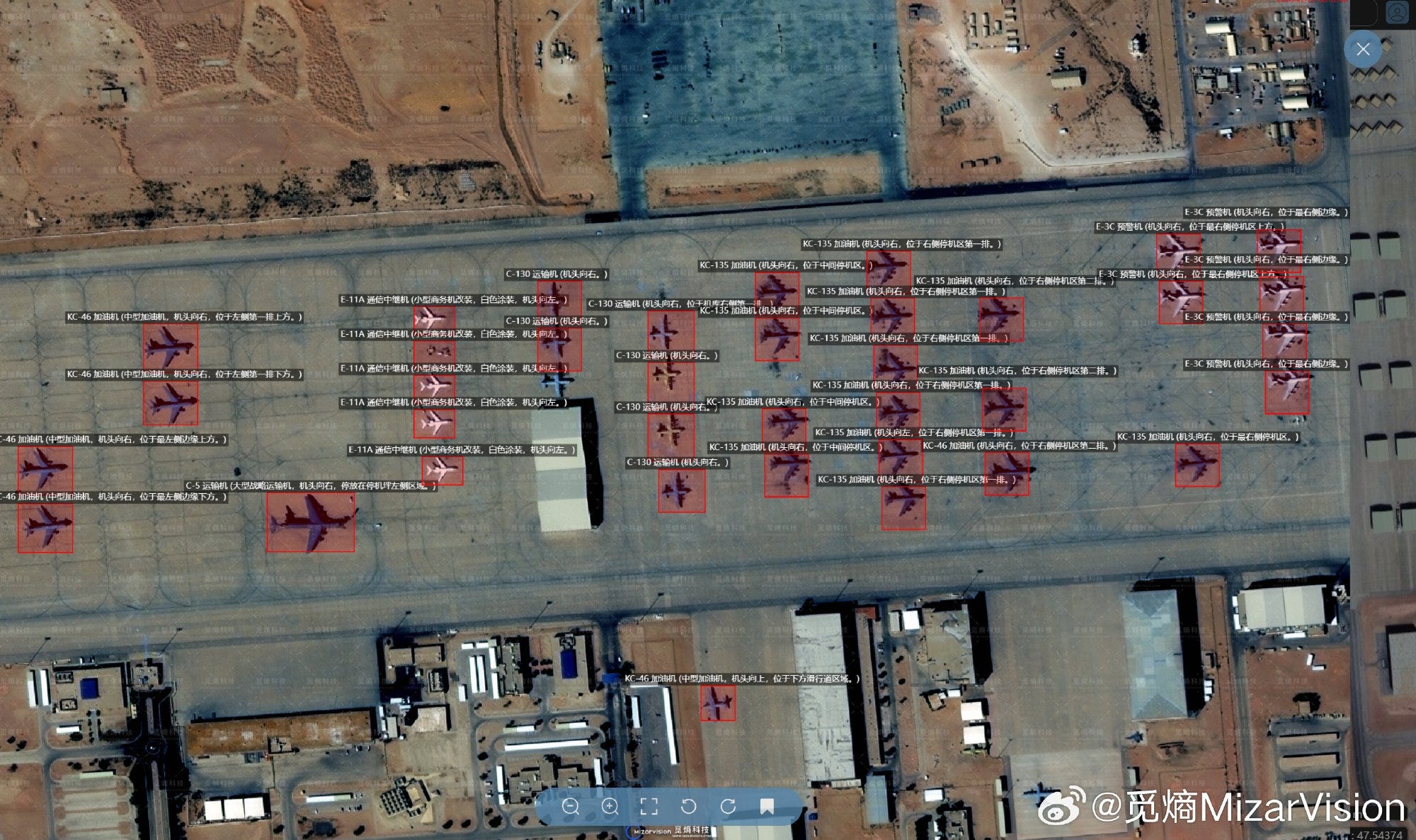
Chinese satellite imagery released to the public showing the American deployment in Prince Sultan Air Base in Saudi Arabia. Iran demonstrated in the June 2025 War its ability to maintain missile fire in the face of Israeli strikes. In a war scenario, Iran will continue to strike Israel until the Israelis seek a ceasefire. Which will happen before the Iranian regime falls. This will lead to a deal.
Iran depleted 25% of the USA’s stockpile of THAAD interceptors in 12 days in June 2025. A prolonged war would deplete the USA’s missile defence capability to an extent that threatens the USA’s position in the Asia Pacific region. The depletion of these capabilities would be much faster if Iran were also targeting American bases in the Persian Gulf, as it would attack those with shorter range missiles.
The damage to American bases in the region would be significant, leading to a higher casualty rate among American soldiers. This could quickly become difficult to sell politically for Trump, pushing him to accept a ceasefire.
The USA understands, from the Yemen experience in 2024, that, even with two aircraft carriers deployed, it could not fully defeat the Houthi in northern Yemen. Similarly, Israel eliminated much of Hezbollah’s leadership, but Hezbollah remains operational, even if degraded. Hamas STILL rules Gaza, even as Israel continues to violate the ceasefire regularly. Therefore, the USA realises that it cannot overthrow the Iranian regime with airstrikes. It can only extract some concessions and make a deal.
If Iran’s energy infrastructure is targeted, it can respond effectively against American-owned energy infrastructure throughout the Middle East, re-establishing deterrence. Meaning that damage to energy infrastructure will be limited, as the two sides understand that they will both be significantly damaged.
Iran does not want to close the Strait of Hormuz, due to the risk of bringing other states in the Middle East into the war. Rather, Iran wants to separate local players from the USA, meaning that strikes would be limited and targeted. The war will therefore not be energy Armageddon.
Unlike the Houthi or Hezbollah or Hamas, Iran cannot fight as an insurgency: it is a nation state with imperial aspirations, requiring it to maintain a decent industrial capability and functioning command and control over society. It therefore cannot afford a lengthy war.
Trump understands that his base does not tolerate a prolonged war with Iran, especially given the growing hostility to Israel within the American right.
The mid-terms are at stake, and most of Trump’s online base is deeply against Israeli influence, especially with the Epstein revelations that have implicated senior members of the Trump administration and their financial backers.
Steve Witkoff, a real estate developer and friend of Trump who somehow became Trump’s top negotiator in the Ukraine, Gaza, and Iran portfolios, said that Trump was frustrated that Iran had not “capitulated” on seeing the American build-up. This suggests that Trump was bluffing, and is surprised at having his bluff called.

The case for unreason
However, what if we are wrong? The following considerations point to that possibility:
There is no strategic logic for an attack on Iran. The Islamic Revolution is likely to turn to a nationalist military dictatorship, under a nominal Supreme Leader, after the death of Khamenei, who is 87. Its main concern will be the surrounding Sunni powers, less so Israel.
The escalation against Iran is being driven primarily by Israel: using its privileged position in American politics, Israel is threatening Trump that it would drag him into a war by attacking Iran first, compelling the USA to intervene to defend it. And its demands are not limited to the nuclear programme, but extend to the missile programme and support for proxies. These demands are repeated by Trump.
Because of Israel, Trump’s demands from Iran are simply unattainable: Iran will compromise on its nuclear programme, but never dismantle it. And it will never give up its missiles, as Trump and Israel are demanding, given the threat from neighbouring states and from Israel.
Similarly, Iran will not halt its support for Hezbollah and Iraqi militias especially: the founders of Lebanese Hezbollah had come to believe in wilayet al-faqih - at the hands of an Iraqi cleric - even before the success of the Islamic Revolution in Iran in 1979. The Lebanese, Iraqi, and Persian Shi’a, especially the leading clerical families, are deeply integrated: the historic leader of Lebanese Shi’a in the 1960s and 1970s was Persian-Lebanese educated in Iraq. And the current Iraqi unofficial political leadership largely grew out of Iranian support. The Iraqi Shi’a themselves need a strong Iran, lest they fall prey to neighbouring Sunni powers allied with Iraq’s own Sunni population. Trying to break up this organic Shi’a axis is highly unrealistic.
Given these unrealistic demands, the objective of Israel and of the Trump administration may be to justify a conflict. And that means that we are dealing with unreasonable decision makers, making catastrophic errors in judgement more likely.
