
On 7 July, Iran reportedly attacked at least four ships in Omani territorial waters using missiles and drones. Past precedent and the current USA-Iran conflict dynamics suggest that the USA will retaliate.
This was Iran again signalling that it will not allow the passage of ships through Hormuz without its approval - no matter what diplomatic niceties are exchanged with Oman. Gaining full control over Hormuz has become the main Iranian objective, alongside preserving the influence of its proxies. Lifting American sanctions is a secondary objective as far as the Islamic Revolution Guards Corps are concerned. Rather, they believe that controlling the Strait, and, therefore, 20% of global oil exports, is what leads to sanctions being lifted.
Regional escalation
On paper, the Americans are very far from leaving the Middle East region - the relationship between the USA and Israel is becoming more intertwined, with Congress proposing legislation in the National Defence Authorisation Act that would effectively merge the American and Israeli military R&D and intelligence. Although American public support for Israel is fraying, the American establishment is moving towards deeper cooperation and more long term backing for Israel. Absent an under the table Iranian-Israeli agreement, this necessitates continued war with Iran, and prevents Iran from taking its natural position as a Western ally - recall that Persia has always looked to the West for alliances, given that it fears being surrounded by Sunni powers.
The Americans are escalating their fight against Iran in other theatres, as the attacks on Iran itself have failed in their declared objectives of de-nuclearization, addressing the Iranian missile threat, and stopping Iranian support for regional proxies. As such, the USA is putting pressure on Iran’s allies in Lebanon, Yemen, and Iraq simultaneously.
In Lebanon, the USA and the government of Lebanon are trying to impose the disarmament of Hezbollah alongside a peace treaty between Lebanon and Israel. A preliminary agreement has already been signed, allowing Israel to remain in Lebanon until Hezbollah is disarmed, whereas Hezbollah demands an immediate Israeli withdrawal and rejects disarmament.
In Iraq, the Prime Minister has announced that militias would be placed fully under state command by 30 September. In theory, the militias are already under state command, and this declaration is largely meaningless. However, the intent is to prepare for a possible trimming of the influence of these militias.
In Yemen, there are mobilisations by the Houthi and their Saudi-backed rivals, with reports of Iranian advisors and equipment arriving, and of fighting taking place near Hodeidah.
Hardening Iranian position
Meanwhile, following the funeral of former Supreme Leader Ali Khamenei, the regime is more willing to take a hard line due to the huge crowds that turned out. While it can always be argued that some of these crowds were government employees who had no choice, it is very difficult to deny that the regime has a strong social base of support, despite repeated unrest. This support is likely to surge if Iran can assert itself against its regional rivals in the Gulf.
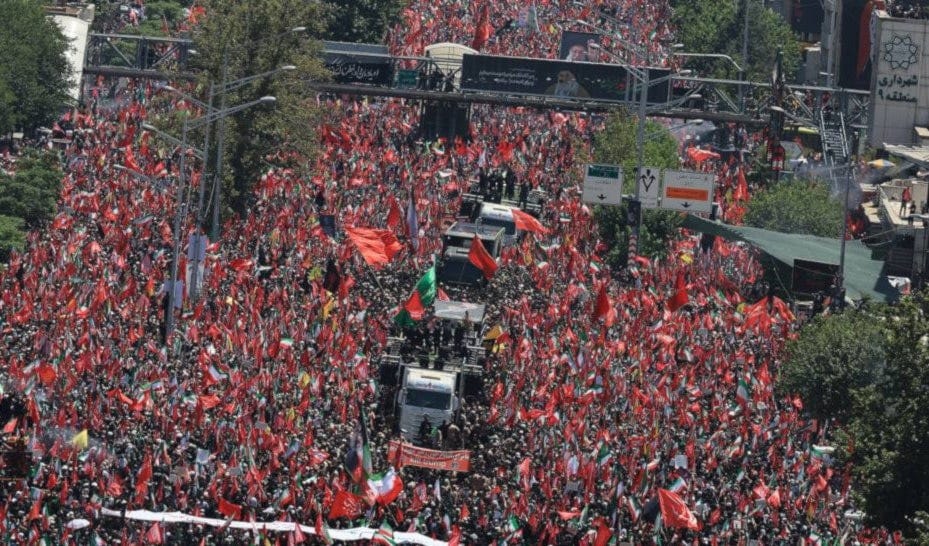
Iran believes it has the upper hand in the region. More importantly, it seems keen to consolidate gains now, rather than continue with the proxy wars that have gone on since 1982 in Lebanon, 2003 in Iraq, and 2004 in Yemen.
The Iranians understand that global oil reserves are low, that markets are prone to panic, that Trump needs to enter the mid-terms without the distraction of the war and its economic impact, and that putting further pressure on global markets may yield more concessions. Simply, Iran does not want to let negotiations continue while its regional influence gets targeted piecemeal.
Commercial Impact
As we had said at the start of the ceasefire, Iran will not let go of Hormuz. It will not permit its full opening. Rather, it will do all it can to maintain its leverage.
