
More shipping disruption
Trump's unrealistic counterblockade of Hormuz invites Houthi and Chinese blockades, and more Iranian attacks on shipping.
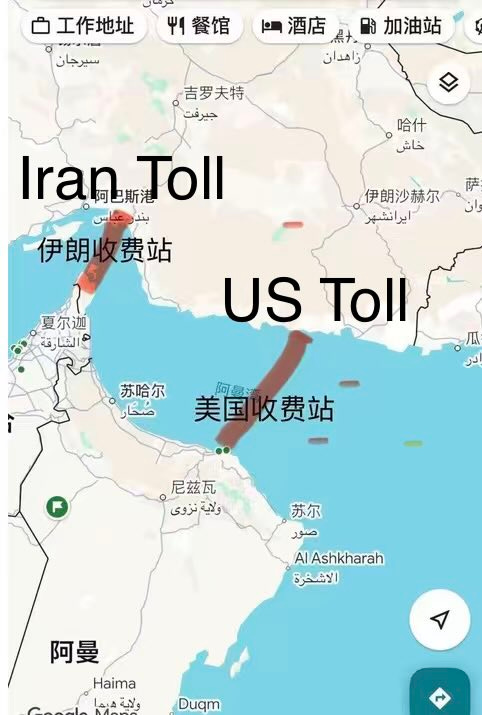
American President Donald Trump announced on Truth Social that the US Navy would blockade the Strait of Hormuz, seizing any ships that traverse Hormuz after having paid tolls to Iran. We do not take this claim too seriously, as we explain below. Rather, this is a new pressure tactic aimed at disrupting Iranian oil exports, a few weeks after the USA had unsanctioned Iranian oil exports in the hope of managing the oil price better.
Trump’s statement followed the failure of negotiations between Iran and the USA in Islamabad. The precise details of the disagreements are unclear, but apparently they relate to the nuclear programme - Iran almost certainly refuses to fully give up enrichment - and tolls over Hormuz. It is also very likely that Iran demanded full access to its frozen funds. Simply, Iran believes it has a very strong hand, and sees even less reason to compromise. Hence Trump’s response. This response is well short of a resumption of hostilities. This may be due to the need to resupply American forces and maintain equipment ahead of the next round, or the realisation that further attacks on Iran are pointless.
Unintended Consequences
Trump has gone from threatening to wipe out the Persian civilisation to trying to beat Iran at its own blockade game. This shows the limits of his options. Of course, he can resume the war, in the hope that this will make the Iranian negotiating position more flexible, while accepting the risk of more permanent global economic damage. That he has not done so reflects the extent of international pressure he must be under to prevent this outcome. It is precisely these pressures that led Trump to opt for this strange and risky policy, perhaps in an attempt to put pressure on oil purchasers to turn against Iran. This policy imposes a set of questions, addressing which helps clarify its commercial impact.
