
The Folly of King Trump
Trump prefers a short war, but, recent revelations about American military capability, and their impact on Iranian strategy, place this in doubt.
Media reports about internal deliberations within the administration of American President Donald Trump about bombing Iran show a rather shocking picture.
The New York Times reports that Trump “pressed [Chairman of the Joints Chief of Staff] General [John Daniel] Caine and [CIA Director] Mr John Ratcliffe to weigh in on the broader strategy in Iran, but neither official generally advocates a certain policy position.” Reading between the lines, this reveals three things:
Trump and his top military and intelligence officials do NOT have a clear strategy for Iran. Wars without clear strategy are by definition unwinnable - the aim of using military force is to attain a political objective. However, this does allow Trump to simply declare victory and walk away without achieving very much, as he did with the Houthi blockade on the Red Sea. Our view remains that this is Trump’s preferred option, and that Iran itself does not want a long war that risks destroying critical state assets.
Neither Caine nor Ratcliffe wants to promise Trump any victories or successes. Rather, they are simply presenting Trump with options and scenarios while not committing to any outcome. This suggests that they lack confidence in their organisations’ abilities to achieve Trump’s aims. It does not help that Trump’s aims are unclear.
Both men are afraid of telling Trump that he can expect no positive outcome from a war with Iran. Their position depends on showing constant loyalty, and that implies approval. This is how strategic blunders are made: reckless leaders and fearful apparatchiks.
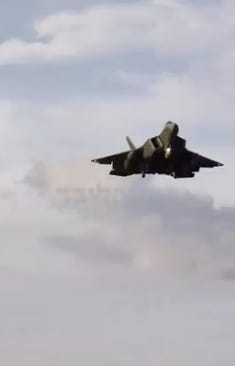
These factors explain why, according to media reports, Trump is frustrated by the inadequacy of his military options, and is considering an initial limited strike on Iran to bring about a new deal within a few days. If that fails, according to the same reports, Trump would then proceed with a wider attack to overthrow the regime later in the year. That in turn suggests that, significant as the current American military build up is, it is not enough for a full-scale regime change war. A fact that will certainly inform Iran’s strategy, as we will explain below in the Commercial Impact.
According to Axois, a media outlet, General Caine was of the view that an Iran intervention was highly risky, in terms of possibility of a long entanglement and the likelihood of American casualties. The Washington Post carried a similar report, including claims that Caine was concerned about interceptor and other munition shortages. These media accounts suggest that Caine is trying to wash his hands of responsibility for any upcoming prolonged, expensive, and destructive war. Rather, he is presenting himself as simply following the President’s orders.
The media are also reporting that Vice President JD Vance and Secretary of State Marco Rubio were not supportive of a strike. Both men are contenders to succeed Trump, and need to keep the MAGA base on side. They are aware of the growing unpopularity of Israel among the right. Therefore, their tacit opposition to strikes on Iran suggests that they themselves realise that:
Iran will not suddenly capitulate in the event of limited strikes. Rather, it will double down on both the nuclear programme and the ballistic missile programme.
American planners realise that a limited attack will not succeed. The best case scenario is a delay in Iran’s various programmes, with China and Russia backing Iran further and enhancing its air defence.
A limited attack risks a long entanglement. It is easy to get into a war. It is much, much harder to get out of it. The Israelis discovered this lesson against Hezbollah in 2006, and Hezbollah discovered it against Israel in 2023-2024.
Taken together, what this suggests is that Trump is isolated within his own administration, even before the mid-terms. Which raises the question: why did Trump place himself in a situation where he must either escalate further, and take immense risks, of back down, and face a terrible humiliation. And the only realistic answer is, because his donors insisted that he escalate with Iran, and because his ego made him cancel the Obama-era Joint Comprehensive Plan of Action, imperfect as that agreement was.
These realities, in turn, have implications:
A costly war with Iran would turn Israel into a massive electoral liability for both Democrats and Republicans, with the rise of anti-Zionist wings within both parties. Already, Israel’s popularity is a historic low. Conversely, if there is no war on Iran, then the lesson for Turkey is that it should expand its own ballistic missile programme to confront both Iran and Israel. Already, the Israeli threat has pushed together a Sunni axis consisting of Pakistan, Turkey, Egypt, and Saudi Arabia. Together, these countries are far more formidable than Israel could ever be. It is also impossible for the USA to take them on. Meaning that the Israelis are stuck either way. And if even a maverick like Trump cannot stop Iran for them, then they have no hope that a future president would stop the Sunni axis.
