
Saudi Arabia struck two shipments of weapons in Mukalla, Yemen on 30 December that had been delivered by the UAE. Subsequently, Saudi Arabia issued a statement calling on the UAE to leave Yemen within 24 hours.
UAE - Saudi conflict theatres
For years, there has been a silent crisis between Saudi Arabia and the UAE, while relations continue to function normally in most arenas. Our view is that this crisis is reaching a dramatic escalation point.
The UAE has been slowly reducing Saudi Arabia’s regional role, in partnership with Israel.
First, the UAE worked diligently to help the Rapid Support Forces (RSF) in Sudan defeat the Saudi-backed Sudanese Armed Forces. This went against the wishes of both, the Saudis and the Egyptians. There are unconfirmed reports of Israeli cooperation with the RSF.
Second, the UAE is working with Israel in Somaliland, as part of a joint strategy to contain the Houthi and secure maritime routes. This poses a risk to Saudi Arabia, as it sees Israeli bases near its south as a threat.
Third, the UAE, through proxies, seized from Saudi-backed groups the Yemeni provinces of Hadramawt and Mohra, which, together, account for half the territory of Yemen, alongside most other provinces not controlled by the Houthi. The UAE is now approaching the formation of a fully independent country in southern Yemen under the auspices of its proxy, the Southern Transitional Council. This country would be totally dependent on the UAE and its allies. Like Somaliland, this too may receive recognition from Israel or the USA. Critically, the STC announced that the Coalition to Support Legitimacy - the Saudi-Emirati umbrella to fight the Houthi - was no more following the Mukalla strike. The main Saudi proxy, the Presidential Council, ordered the removal of all UAE presence from Yemen. This signifies a breakdown in relations between Saudi Arabia and the UAE.
Saudi fears
It is inconceivable, from the Saudi perspective, that the UAE and Israel are doing this without American support or at least acquiescence. Critically, a southern Yemeni state under UAE influence would block Saudi Arabia from its ambition to export oil via southern Yemen, bypassing the Strait of Hormuz. It would mean that the UAE and its proxies are surrounding Saudi Arabia.
This fight is becoming existential for Saudi Arabia, and MBS is known for his willingness to take major risks. With the USA deprioritising the Middle East, there is no reason for the borders in the Arabian Peninsula to remain as they were - these borders only exist due to the British-American order, which is strained and falling apart. As a result, there is pressure on Saudi Arabia to consolidate as the regional hegemon, to safeguard itself against Israel, the UAE, Turkey, and Iran. Especially as Iran is distracted with an internal crisis.

As discussed above, with the Al Saud now reliant exclusively on finance and security to maintain their rule, the sight of neighbouring countries like Sudan, Somalia and Yemen being de-facto partitioned is seen as a critical threat. Especially as it is being done at the hands of the UAE, which, the Saudis almost certainly believe, has ambitions on their own territories.
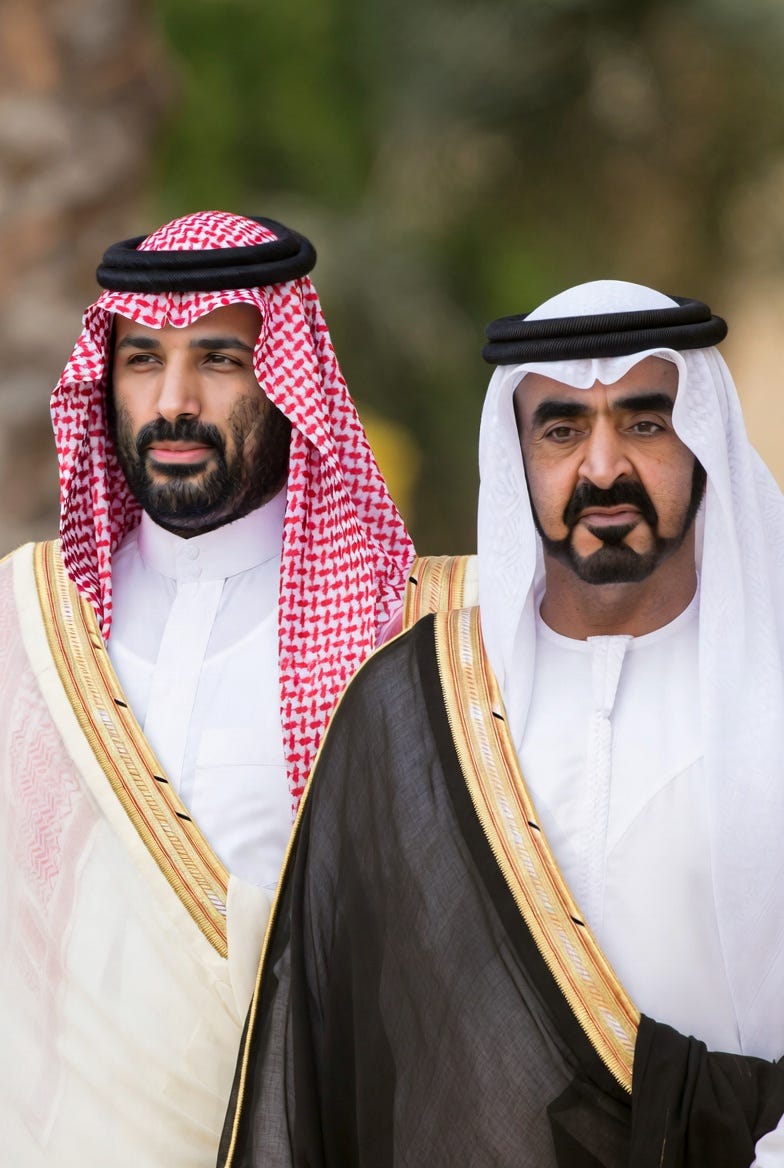
There is also an element of personal pride and egos: Saudi Crown Prince Mohammad bin Salman (MBS) believes that Emirati President Mohammad bin Zayed (MBZ) has repeatedly betrayed and undermined him, including by pulling the rug from under him in Yemen, and by trying to show the Americans that the UAE can better serve the USA than Saudi Arabia. That is a threat to both, MBS personal prestige and his role as future ruler of Saudi Arabia.
Commercial Impact
Saudi Arabia issued a statement calling on the UAE to leave Yemen within 24 hours. Critically, the Saudis cited national security red lines, and warned that UAE actions are a threat to relations between the two countries. It is likely that Saudi Arabia will follow this up with concrete actions against the UAE.
The wording of Saudi statements reflects frustration with the UAE, as well as an attempt to justify much wider escalation, based on the UAE’s refusal to pursue “wisdom” and safeguard “brotherly ties” between the two countries. In Arab political discourse, this kind of language is a prelude to accusing the other side of deep betrayal, justifying escalation. This is made more likely by the UAE’s own statement, which firmly rejected Saudi claims and insisted on remaining in Yemen.
